
On the coldest week of the year in Syracuse, the last thing you want is a furnace that keeps shutting off, short cycling, or quitting altogether. When that happens, it is more than an inconvenience. It is worry about frozen pipes, kids trying to sleep in cold bedrooms, and yet another repair bill that hits at the worst possible time. After a couple of those nights, it is natural to start asking what you can change so it does not keep happening.
For many Central NY homeowners, that question eventually lands on the thermostat. Maybe the one on your wall is decades old, or the new smart model you installed has not delivered the comfort you hoped for. You may have heard that a thermostat upgrade can cut energy use, but you want to know something more practical. Can a new thermostat actually help prevent furnace breakdowns in a climate like Syracuse, or is that just sales talk?
At Holbrook Heating & Air Conditioning, we have been answering that question in real Syracuse homes since 1983. Our team has handled thousands of heating calls across Central and Upstate New York, from city homes near Onondaga Lake to country houses that see brutal lake-effect cold. We see how thermostats, wiring, and furnace controls behave in long winters, and how often a “furnace problem” really starts at the thermostat. In this guide, we share what we have learned so you can decide if a thermostat upgrade in Syracuse makes sense for your home and your furnace.
Why Thermostats Matter More In Syracuse Winters
Syracuse winters are long and intense, and that reality shapes how your furnace and thermostat work together. For months at a time, your heating system can run for hours every day, cycling on and off as outdoor temperatures swing from frigid nights to slightly milder afternoons. Each time your thermostat calls for heat, the furnace goes through a start-up sequence that draws extra current, ignites fuel, and ramps the blower. Those starts are where a lot of wear happens.
The thermostat is the traffic controller for all that activity. It decides when the furnace should start, how long it should run, and when it should shut off. In a place like Central NY, where temperatures bounce around freezing and below, an older or poorly set thermostat can trigger many more starts than the system really needs. That means your igniter, blower motor, and control board work harder than they should over the course of a winter.
When you feel a room constantly swinging between too hot and too cold, that is often a sign of control issues, not just a weak furnace. The thermostat might be reading temperature change too aggressively, or it might be in a spot that reacts quickly to drafts or sunlight. From our decades of work across Syracuse neighborhoods, we see that homes here put far more cycles on a furnace than similar homes in milder regions. That makes the quality of thermostat control especially important if you want to reduce nuisance breakdowns and extend the life of your heating equipment.
How Old Or Improper Thermostats Can Contribute To Furnace Breakdowns
Many homeowners look at the thermostat and think it either works or it does not. In reality, there is a big gray area where the thermostat “works” in the sense that the furnace turns on, but it quietly creates patterns that lead to stress and repairs. We see this regularly in older Syracuse homes that still have basic mercury or early digital thermostats on the wall.
One common issue is temperature accuracy. A thermostat that is a few degrees off can cause the furnace to overshoot or undershoot the setpoint. If it is mounted in a hallway that sees drafts from the front door, or in direct sun from a south-facing window, it might think your home cooled down or warmed up much faster than it really did. The result can be short cycling, where the furnace runs for only a few minutes at a time before shutting off and restarting again soon after.
Short cycling is hard on equipment. Each time the furnace starts, the igniter has to light the burners and the blower motor has to spin up from a dead stop. Over a long Syracuse winter, that can translate into many extra starts if the thermostat is calling for heat in rapid bursts. We often see this pattern behind early igniter wear, control board issues, and limit switches tripping because the heat exchanger never gets into a smooth, steady run.
Basic maintenance issues on the thermostat side also create what look like furnace failures. Low thermostat batteries on a cold night can cause the display to go blank or flicker, leaving the furnace with no call for heat. Loose thermostat wiring can create intermittent heat, where the furnace responds sometimes but not others. In many emergency “no heat” calls we handle around Syracuse and Central NY, the furnace itself is fine. The fault lies with a thermostat that is old, miswired, poorly placed, or simply not matched to how the home is used.
What A Modern Thermostat Can Do Differently
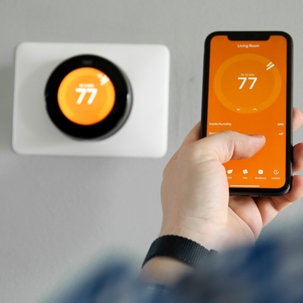
Modern thermostats bring more than smart-phone control and slick screens. They offer finer control over how often and how long your furnace runs, which can reduce unnecessary cycling and smooth out temperature swings. When set up correctly, this can lower stress on key components and reduce some of the breakdowns that come from constant starts and stops.
One important capability is better temperature sensing and cycle control. Many newer thermostats use more sensitive sensors and allow you or your technician to adjust the “cycle rate” or similar settings. That is the thermostat’s internal rule for how often it is willing to start the furnace to maintain your set temperature. In a Syracuse winter, dialing in that behavior so the furnace runs a bit longer and rests a bit longer, instead of rapid on-off bursts, can be kinder to components without sacrificing comfort.
Programmable and smart thermostats can also smooth furnace operation over the day. For example, you might program a slight setback while everyone is at work or school, then a gradual warmup before you return. Instead of many small changes that cause frequent cycles, the furnace runs in more predictable patterns. Some smart models learn your home’s “heat-up” time and start early enough to reach your setpoint without racing through repeated short cycles.
On compatible systems, especially two-stage or modulating furnaces from brands like Lennox and Rheem, an advanced thermostat can control staging more precisely. That means the furnace can run at a lower output level more often, instead of blasting at full power every time it turns on. Lower-stage operation is generally easier on the heat exchanger and blower and creates fewer temperature swings, which your thermostat detects and responds to more gently. At Holbrook Heating & Air Conditioning, our technicians regularly set up these control strategies, matching thermostat features to the furnace so the whole system works as intended, not just as the default settings allow.
Some newer thermostats also provide basic diagnostic information. They might show error messages relayed from the furnace or track how long your system runs each day. While these features do not replace a professional diagnosis, they can alert you earlier when something is trending wrong, before a total shutdown on a very cold night. Used well, this kind of information can be part of a broader plan to keep your furnace reliable in Central NY winters.
Can A Thermostat Upgrade Really Prevent Furnace Breakdowns?
This is the heart of the question for many Syracuse homeowners. A thermostat upgrade can help reduce certain types of problems, but it is not a magic reset button for a furnace that is already near the end of its life or has been neglected for years. It helps to separate what control changes can influence from what they cannot.
When we look at breakdowns linked to control issues, we often see patterns like worn igniters from too many starts, blower motors that have cycled on and off far more than necessary, or limit switches tripping because of irregular run patterns that cause uneven heating. These are areas where a better thermostat, properly installed and configured, can make a difference. By avoiding excessive short cycling and running the system in smoother, more predictable patterns, you reduce some of the mechanical stress that drives those failures.
On the other hand, no thermostat can fix a cracked heat exchanger, a failing blower bearing, or years of dust and debris that have built up on burners and in the blower housing. If your furnace is old, undersized, or has not had regular maintenance, a new thermostat may still improve comfort and control, but it will not erase underlying wear. With a 4.8-star Google rating backed by thousands of reviews and an A+ BBB rating, we are careful to explain this to our Central NY customers so expectations stay realistic and decisions are based on the real condition of the system.
Where we see the most practical gain is when a thermostat upgrade addresses clear control flaws. Replacing a very old mercury thermostat that has poor placement and no scheduling, or swapping out an incompatible or misconfigured smart thermostat that has been causing constant cycling, can noticeably stabilize furnace behavior. In those cases, the thermostat upgrade is part of preventing specific breakdowns driven by bad control, not a blanket shield against every possible issue. Our approach is to evaluate both the thermostat and the furnace, then recommend an upgrade only when it clearly supports the health and operation of the system in your particular Syracuse home.
Signs Your Thermostat May Be Part Of The Problem
Learning to recognize when your thermostat might be contributing to comfort or performance problems can save time, money, and frustration. Many homeowners assume that inconsistent heating or cooling always means there is a mechanical failure in the furnace or AC system, but the thermostat is the control center for the entire setup. If it is sending the wrong signals, reading temperatures incorrectly, or failing to communicate properly, even a perfectly functional system can behave unpredictably. Understanding these warning signs helps you explain symptoms more clearly when you call for service and reduces the risk of replacing expensive components that are not actually causing the problem.
Common signs that your thermostat may be part of the issue include:
- Short cycling, where the system turns on and off every few minutes instead of running steady cycles, often caused by faulty sensors, poor placement, or incorrect internal settings
- Temperature mismatch, such as the thermostat reading 70 degrees while rooms feel much colder or warmer, pointing to sensing errors or location problems
- Uneven comfort, where some rooms are comfortable but others are consistently too hot or too cold despite the same thermostat setting
- Unresponsive controls, including delayed system response when you change the setpoint or no response at all
- Blank, flickering, or fading displays, which can indicate power issues, wiring problems, or internal device failure
- Erratic scheduling, where programmed settings do not run at the correct times or the system starts heating or cooling unexpectedly
- Battery-related issues, including frequent low-battery warnings or total shutdowns on battery-powered models
- Draft exposure, where the thermostat is affected by nearby vents, windows, doors, or exterior walls that distort temperature readings
Thermostat problems often overlap with real equipment issues, which is why they are easy to miss. A struggling system can wear out faster when it receives constant incorrect signals, and a faulty thermostat can make a healthy system look broken. A thorough evaluation should always look at both the control device and the equipment it manages. Addressing thermostat issues early often prevents repeat breakdowns, improves comfort consistency, and helps ensure that any future repairs are focused on the true source of the problem, not just the most obvious symptom.
Choosing The Right Thermostat Upgrade For Your Syracuse Home
Once you decide a thermostat upgrade might help, the next question is which thermostat is right for your home and furnace. This choice is less about chasing the newest gadget and more about finding a control that works well with your existing equipment, wiring, and daily routine in Central NY.
The first consideration is compatibility with your furnace. If you have a single-stage furnace, most basic thermostats can control it. If you have a two-stage or modulating furnace from a major brand, you need a thermostat that can communicate and manage those stages correctly. Using a simple on-off thermostat on an advanced furnace can limit its ability to run at lower output, which means more full-power starts and stops than necessary. That can cut into both comfort and equipment longevity.
Wiring is another practical constraint, especially in older Syracuse homes. Many advanced thermostats need a common wire for power. If your current setup does not have one, an upgrade might require additional wiring or a different control solution that fits the wiring you have. This is where a professional evaluation makes a big difference, because an incorrectly wired smart thermostat can cause more harm than good.
Your lifestyle and expectations also matter. If your schedule is fairly regular, a programmable thermostat might be all you need to manage set-backs and reduce unnecessary run time. If your schedule changes often, or you travel frequently, a smart thermostat with remote access can be more convenient. In either case, the priority for Syracuse homeowners is a thermostat that is reliable in cold weather, easy to use, and properly configured. At Holbrook Heating & Air Conditioning, our large local team has set up controls in a wide variety of Central NY homes, so we can match thermostat features to your specific furnace and wiring instead of taking a one-size-fits-all approach.
Why A Thermostat Upgrade Works Best With A Furnace Checkup
Even the best thermostat will not protect your furnace if the equipment itself is dirty, worn, or unsafe. That is why we usually recommend pairing a thermostat upgrade with a thorough furnace checkup, especially before or after a heating season where you have had trouble. Looking at both the control and the furnace at the same time gives a clearer picture of what is really happening in your system.
During a maintenance visit, a technician does far more than glance at the thermostat and change a filter. They inspect burners for proper flame, check the flame sensor and igniter, verify temperature rise across the heat exchanger, and confirm that safety limits are working as they should. They also listen for signs of blower wear, check for airflow issues that can cause overheating, and look for early indications of more serious problems.
On the control side, the technician can confirm that the thermostat is wired correctly, located in a sensible spot, and set up with appropriate cycle rates, staging settings, and schedules for your home. By looking at both the brain and the muscle of the system together, we can catch issues that might otherwise be missed, such as a thermostat setting that has the furnace working harder than necessary even though the mechanical parts are still in good shape.
In Syracuse and across Central NY, we often meet homeowners during an emergency call, when the furnace has already failed on a bitter night. Because our team at Holbrook Heating & Air Conditioning provides 24/7 emergency service, we can respond quickly to get the heat back on. From there, pairing a thermostat review with a full checkup gives you a better chance of avoiding preventable repeat breakdowns during the rest of the season.
Plan A Smarter Path To Fewer Breakdowns In Central NY
In a winter climate like Syracuse, no single upgrade can make a furnace last forever. A thermostat, however, does control how hard your system has to work to keep your home comfortable. When it is outdated, poorly located, or mismatched to your furnace, it can quietly drive the short cycling and erratic operation that lead to more frequent repair calls. When it is chosen carefully and configured correctly, it can smooth out those patterns, improve comfort, and help you catch some problems before they shut you down on the coldest nights.
If you are seeing signs that your thermostat might be part of the problem, or you are simply tired of gambling on your furnace every time a cold front hits Central NY, a combined thermostat and furnace evaluation is a practical next step. Our team at Holbrook Heating & Air Conditioning has been helping Syracuse homeowners with these decisions for decades, using local experience and careful diagnostics to recommend whether a thermostat upgrade, maintenance, or a different solution will serve you best. To talk through your options or schedule a visit, reach out today.