
On a January night in Syracuse, your furnace might run for hours, yet some rooms still feel chilly and your utility bill keeps climbing. In July, the air conditioner buzzes along, but the upstairs bedrooms stay stuffy and uncomfortable. Smart thermostats are everywhere in ads and on store shelves, and it is natural to wonder if one of those devices could finally solve the comfort and cost issues in your home.
In Central and Upstate New York, we live with long, cold winters, quick temperature swings in the spring and fall, and humid summers that put your systems to the test. A smart thermostat sounds like a simple upgrade that can tame all of that. The reality is more nuanced, especially in older Syracuse homes with mixed or aging equipment. Whether a smart thermostat is suitable for your house depends on your existing HVAC system, your wiring, your schedule, and how you actually use your home.
At Holbrook Heating & Air Conditioning, we have been working in Syracuse and surrounding communities since 1983, and many of us use smart controls in our own homes. Our technicians spend their days in basements, attics, and utility rooms across Central and Upstate New York, seeing where smart thermostats pay off and where they cause headaches. In this guide, we share what we have learned from decades of local experience so you can decide if a smart thermostat makes sense for your Syracuse home, and how to approach the upgrade the right way.
Why Smart Thermostats Appeal to Syracuse Homeowners
Most homeowners in Syracuse come to the idea of a smart thermostat for one of three reasons. The first is the utility bill that seems to climb every winter as the furnace runs nearly nonstop. The second is comfort: hot and cold spots from room to room, or upstairs bedrooms that never quite feel right. The third is convenience. You get tired of fiddling with a dial before bed or coming home to a house that is either too cold or too warm.
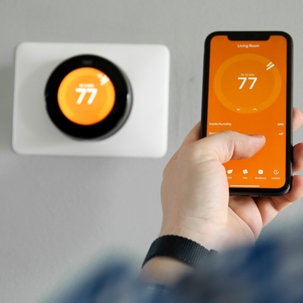
Smart thermostats promise to simplify all of that. They offer scheduling that matches your daily routine, control from your phone, and in many cases the ability to learn your habits and make small adjustments in the background. Some models provide reports on how long your system runs and how your settings affect energy use. For a busy household that juggles work, school, and activities, those features can cut down on “we left the heat up all day” moments.
In a place like Syracuse, the appeal goes even further. Our heating season is long, and we often use both heat and cooling in the same month during shoulder seasons. That means lots of opportunity for waste if your thermostat is left at one setting around the clock. A smart thermostat can automatically respond to weekday versus weekend patterns, unexpected warm spells, or a late night at the office, which can make a noticeable difference over the course of a season.
We also hear from homeowners who are simply interested in technology and want their homes to feel more connected. As a family-owned company that has watched home comfort technology evolve over four decades, we understand that pull. Our role is to help you separate the real day-to-day advantages from the marketing promises, so you are not buying a device that does not fit your home or your habits.
How Syracuse Weather Changes the Smart Thermostat Equation
Syracuse weather creates conditions where thermostat settings really matter. Winters are not just cold for a week or two. We see extended stretches of below-freezing temperatures, lake-effect snow, and days where the temperature jumps up or down quickly. Your heating system spends months working hard, and how you control it affects both comfort and operating time.
In deep winter, a big setback on the thermostat, such as dropping the temperature far down at night or while you are out, can sometimes backfire. In a drafty older home with limited insulation, the furnace may have to run a very long time to recover, which can leave parts of the home uncomfortable. In some cases, it can strain older equipment. A smart thermostat can help by using more moderate setbacks and starting the recovery a bit earlier, based on patterns in your home, so the house feels right when you need it without excessive run time.
We also see a lot of variation during the shoulder seasons in Central New York. A cool morning might give way to a mild afternoon, and then temperatures drop again after sunset. Systems can end up cycling frequently if the thermostat is set too aggressively. Smart controls can smooth that out with features like adaptive recovery, better schedules, and, in some models, awareness of how quickly your home heats and cools. This kind of control is much harder to achieve with a simple manual thermostat.
Summer brings its own challenges. Syracuse may not feel like the Deep South, but summer humidity can be high, and that affects comfort just as much as temperature. Running the fan constantly, or allowing the system to short-cycle, can leave the air feeling clammy. Some smart thermostats can coordinate fan operation and cooling more thoughtfully or pair with equipment that has built-in humidity control. Our technicians regularly help customers adjust fan settings and schedules to handle those muggy July and August days more comfortably.
Because our employees live in the same communities, we plan our own thermostat settings around these exact patterns. That local knowledge is what we bring into every conversation about whether a smart thermostat will actually make your Syracuse home more comfortable and efficient.
Will a Smart Thermostat Work With Your Syracuse HVAC System?
One of the most important questions, and one that is often glossed over in generic advice, is compatibility. Many Syracuse homes have systems that are not identical to what you see in national ads. Some have single-stage furnaces with basic central air conditioning. Others have two-stage or variable-speed furnaces, heat pumps, boilers with separate air handlers for cooling, or ductless mini-splits. The way your equipment is built and wired influences which smart thermostats will work well.
Most residential thermostats control low-voltage systems. They send signals to your furnace, air conditioner, or heat pump to turn heating or cooling on and off, and sometimes to switch between stages. Many smart thermostats need a constant power supply to run their screen and wireless connection. That power typically comes from a wire called the C-wire, or common wire. In plenty of older Central New York homes, we open the thermostat and find that this wire is missing or not connected.
When a homeowner buys a retail smart thermostat and discovers there is no C-wire, they often try to work around it with adapters or creative wiring. We frequently get calls when the system starts behaving oddly, such as short cycling, not responding to heat calls, or losing some comfort features. A missing or misused C-wire can also stress control boards or other components. In other cases, the thermostat gets wired as a simple single-stage device on a two-stage or variable-speed system, which means the homeowner loses much of the comfort that equipment was designed to provide.
Heat pumps, dual-fuel setups that combine a heat pump with a furnace, and some boiler systems add more complexity. The thermostat must know when to switch between heating modes and what kind of backup heat the system uses. If a smart thermostat is not configured correctly for that equipment, you may end up with higher electric bills or poor comfort. This is where a professional evaluation in a Syracuse home is worth the time. Our technicians check the wiring, confirm system type, and match that to thermostats that can handle the job correctly.
We have a large team of highly trained technicians who spend much of their day dealing with controls on modern Lennox, Rheem, Mitsubishi, and other systems. They are comfortable sorting out wiring diagrams, control boards, and the details that can be overwhelming for a homeowner. Before we recommend a smart thermostat, we look at your equipment label, open the furnace or air handler, and verify that the connections and voltages align with what the thermostat requires. That step alone can reduce many of the frustrations we see when a thermostat is chosen purely by price or online reviews.
Smart Thermostat Features That Matter in a Syracuse Home
The smart thermostat market is full of long feature lists, but not every capability has real value in a Syracuse home. Some features provide clear, everyday benefits in our climate, while others are nice to have but less critical. Understanding which ones line up with your home and routine helps you choose more wisely.
Scheduling and learning features are usually at the top of the list. These allow the thermostat to follow weekday and weekend routines or even adjust automatically over time based on when the home is occupied. In Syracuse, where winter days are short and evenings at home are long, a good schedule can keep your living areas comfortable when people are awake and active, then ease off a few degrees overnight or when the house is empty. A learning thermostat can refine this without you constantly adjusting it, which is useful for busy households.
Remote sensors are another feature that have strong practical value here, especially in older two-story homes. Many Syracuse houses have the main thermostat on the first floor, while the second floor runs much hotter in summer and can be cooler in winter. Remote sensors placed in key rooms can help the thermostat make decisions based on the spaces you actually use. For example, using a bedroom sensor at night can prevent that room from becoming uncomfortably warm or cold while the thermostat sits satisfied downstairs.
Geofencing and occupancy sensing can matter for people with irregular schedules. If you commute into downtown Syracuse some days and work from home others, a thermostat that uses your phone’s location or motion sensing can relax settings when you leave and bring the house back to comfort as you head home. This kind of feature can trim unneeded runtime during the many hours a week when no one is home.
Humidity control and fan modes also deserve attention in Central New York. In winter, the air inside can become very dry, and in summer, humidity builds up. Some smart thermostats can coordinate with equipment that includes built-in humidity functions, and many allow more refined fan settings. For example, you might circulate air at low speed between cooling cycles to even out temperatures without adding as much humidity. During installation or maintenance visits, we often walk customers through these settings so they get beyond the basic “on” or “auto” fan choices and dial in what works best for their home.
Realistic Comfort & Energy Benefits for Central New York Homes
Smart thermostats can contribute to better comfort and lower energy use, but the device itself is only part of the picture. How much benefit you see in a Syracuse home depends on factors such as insulation, window quality, ductwork condition, and the health of your heating and cooling equipment. It also depends heavily on whether schedules and features are set up thoughtfully.
One of the most practical benefits we see is simply better follow-through on good habits. Many homeowners know they should turn the heat down a bit when they leave for the day or at night, but in real life it is easy to forget. A smart thermostat’s schedule, coupled with occasional fine-tuning based on your actual routine, reduces these lapses. Over a long winter, small, consistent reductions in runtime can add up to noticeable savings on your heating bills.
Comfort gains can be just as important. With remote sensors and smarter scheduling, you can target comfort in the spaces you use most at the times you use them. Instead of tolerating a cold living room in the evening or an overly warm bedroom at night, you can shape the temperature pattern through the day. In shoulder seasons, adaptive features can cut down on that feeling of the system constantly turning on and off as the outside temperature jumps around.
There is a common misconception that installing a smart thermostat by itself guarantees large bill reductions. In reality, the thermostat is a control tool. If a home leaks air, has unbalanced ducts, or an aging, inefficient furnace, those issues will still limit efficiency. In some Syracuse homes, we advise combining a thermostat upgrade with basic sealing, insulation improvements, or system maintenance to get the most value. During an in-home visit, we can look at your whole situation and talk honestly about where a smart thermostat will help and where other steps might come first.
Our customer-first approach means we do not rely on generic national savings claims. Instead, we talk through your actual schedule, your comfort complaints, and the age and condition of your system. From there, we can outline realistic expectations so you are not disappointed by promises that were never a good fit for your home.
When a Smart Thermostat May Not Be the Right Move
Being enthusiastic about technology does not mean it is the correct choice for every home or every moment. Part of our job is to point out cases where a smart thermostat may not be the best investment right now for a Syracuse homeowner. That kind of honesty builds better long-term relationships and leads to better results.
Certain system setups are known to be more challenging. Some older boiler-only systems that feed radiators or baseboard heat use different control methods than newer forced-air systems. While there are smart options for many of these situations, not every widely marketed thermostat is compatible without extra components. Multi-zone configurations, where different areas of the house have their own thermostats, can also complicate things. These are cases where a professional evaluation is especially important before you buy a device.
There are also times when other upgrades can bring more benefit per dollar. If your Syracuse home has very little attic insulation, obvious air leaks, or a furnace that struggles to keep up even with a basic thermostat, improving the building envelope or addressing equipment issues may take priority. Once the system can heat or cool more effectively, a smart thermostat can then refine how and when it runs. We often walk homeowners through this kind of prioritization so they do not put money into a control that cannot fix deeper problems.
Some people simply prefer straightforward, no-frills controls. If you know you are unlikely to use an app, review energy reports, or adjust settings once they are established, a simpler programmable thermostat might serve you just as well. The point is not to talk anyone out of smart technology, but to match the tool to the person and the home. With thousands of reviews and an A+ rating with the Better Business Bureau, we have built our reputation on giving recommendations that make sense, not just the newest thing on the shelf.
If you are unsure which camp you fall into, a conversation with our team can help clarify it. We can ask the right questions about your system, your comfort priorities, and your comfort with technology so you can make a choice that you will still feel good about several winters from now.
How Holbrook Heating & Air Conditioning Helps Syracuse Homeowners Go Smart the Right Way
Choosing and installing a smart thermostat in a Syracuse home is not just a matter of picking a brand and tightening a few screws. We follow a process that looks at your equipment, your wiring, and your household’s routine so the upgrade supports both comfort and efficiency. That process starts with a system evaluation, where a technician examines your furnace, air handler, heat pump, or boiler, confirms the control wiring, and identifies the type of system you have.
Once we understand your setup, we talk with you about how you use the home. Are you out most weekdays? Do you work from home? Are there rooms that are always too hot or too cold? Do you have concerns about humidity in summer? These questions help us recommend thermostat options that match your needs. In many cases, that involves controls that work smoothly with equipment from brands we install and service, such as Lennox, Rheem, or Mitsubishi systems, so that features like multi-stage heating or variable-speed operation are used correctly.
During installation, our technicians handle the wiring, configure the thermostat for your specific equipment, and walk you through the basic features. That might include setting up initial schedules, connecting your phone app, and showing you how to use remote sensors or adjust fan modes. Our goal is to leave you with a system that not only turns on and off, but that you feel confident using without frustration.
Because our company has grown to more than 200 employees, we have the capacity to respond promptly if a control issue affects your heating or cooling. Combined with 24/7 emergency service, that means you are not left without heat on a cold Syracuse night if something goes wrong. At the same time, we maintain the feel of a local family business, with technicians who live in the same neighborhoods and understand exactly what your home is up against each season.
Ready to Find Out If a Smart Thermostat Fits Your Syracuse Home?
Smart thermostats can be a strong upgrade for many Syracuse homes, especially when they are matched correctly to the existing HVAC system and set up with our local weather and your real schedule in mind. They can smooth out hot and cold spots, trim wasted runtime, and make it easier to live comfortably through our long winters and humid summers. The key is to treat them as part of a complete comfort plan, not as a one-size-fits-all gadget.
If you are considering a smart thermostat, we invite you to reach out to Holbrook Heating & Air Conditioning for a straightforward evaluation. We can look at your current equipment and wiring, talk through your comfort priorities, and let you know whether a smart thermostat is a good fit right now or if other steps should come first. When it is the right move, we can recommend, install, and configure a thermostat that works with your Syracuse home instead of against it.