
You can dust the same shelves every week and still feel like your home’s air never stays clean, especially once Syracuse’s heating season kicks in and the furnace runs for hours every day. Maybe someone in your family has allergies, or you have pets, and you are wondering why things still feel stuffy even though the heat or air conditioning seems to be working.
In many Central and Upstate New York homes, the missing piece is not the equipment itself; it is how the air filtration system is cared for between service visits. A few simple habits, like checking filters on a schedule and keeping vents clear, can change how your home feels day to day. The challenge is knowing which tasks are safe and worthwhile for you to handle, and which ones belong with a trained HVAC technician.
At Holbrook Heating & Air Conditioning, we have been working on heating, cooling, and indoor air quality systems in Syracuse and surrounding communities since 1983. Our team members live in the same neighborhoods, breathe the same air, and see firsthand what long winters, humid summers, and seasonal pollen do to filters and equipment. In this guide, we will share practical DIY air filtration maintenance tips we give our own neighbors, and show how they fit alongside professional care.
How Your Air Filtration System Protects Your Home
Every time your furnace or central air conditioner runs, it is pulling air from your living spaces, sending it through a filter, conditioning it, and then pushing it back through supply ducts. The large grilles on your walls or ceilings are returns that draw air back to the system. That air passes through the filter before it reaches the blower, then the blower moves it across the heating or cooling coil and out through the supply vents into each room.
The filter’s first job is to catch dust, pet dander, fibers, and other particles so they do not circulate through your home again and again. Its second job is to protect the internal components of your HVAC system. When a filter does its work, the blower, coil, and heat exchanger stay much cleaner. That helps the system move air more freely and reduces the amount of dirt that can stick to parts and cause wear.
When a filter is neglected, it fills with debris and becomes harder for air to pass through. This extra resistance is called pressure drop. Your blower then has to work harder to pull the same amount of air through the filter, which can lead to longer run times, more noise, and uneven temperatures in different rooms. Over time, our technicians see this show up as dirty blower wheels, dust on coils, and furnaces or air handlers that struggle to keep up.
In Syracuse and Central New York, this matters because systems often run for long stretches during winter. If a filter that might last three months in a mild climate goes unchanged here, it can clog much faster. We consistently find that homes with regular filter checks have cleaner equipment, more stable comfort, and fewer avoidable problems than homes where filters are “set and forgotten.”
DIY Filter Maintenance: What You Can Safely Handle
For most homeowners, the single most effective DIY air filtration maintenance habit is taking control of filter checks and replacements. This is well within reach as long as you know where the filter is, what size and type you need, and how often to look at it based on how you live. Getting those basics right can make a noticeable difference in how clean your air feels and how smoothly your system runs.
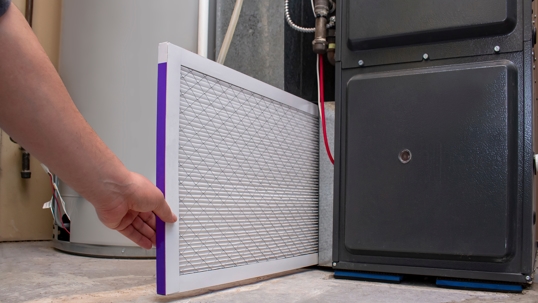
The first step is to locate your filter. In many Syracuse homes, the filter is in a slot next to the furnace or air handler, often on the side or bottom where the large return duct connects. In some cases, filters sit behind a grille on a wall or ceiling return. Once you find it, check the frame for size markings, such as 16x25x1. You will also see arrows that indicate airflow direction. When you install a new filter, those arrows need to point toward the furnace or air handler, not into the room.
Next, think about the type of filter. Filters are rated by MERV, which stands for Minimum Efficiency Reporting Value. A higher MERV number means the filter captures smaller particles. Many residential systems in our region perform well with MERV ratings in a moderate range, where the filter improves air quality without creating so much resistance that airflow drops off. Some systems, especially older ones or those with marginal ductwork, may not handle very high MERV filters well without adjustments.
Timing matters too. A common rule of thumb is to replace a one-inch filter every three months. In Syracuse, that is often too long during heavy heating or cooling use. As a starting point, we suggest checking your filter monthly. Homes with no pets and light occupancy may be able to replace every two to three months. Homes with pets, smokers, or allergy concerns often need replacements closer to every one to two months, especially in the heart of winter or during high pollen seasons.
Choosing the Right Filter for Your System
Not every filter that fits your slot is a good match for your system. Thin fiberglass filters are inexpensive and create very little resistance to airflow, but they also capture fewer small particles. Pleated filters, which have more surface area, usually catch more dust and allergens with a moderate increase in resistance. For many households, a mid-range pleated filter gives a good balance between cleaner air and healthy airflow.
Some homeowners are tempted to buy the highest MERV filter on the shelf, assuming it will give the cleanest air. In reality, very high MERV filters can create a lot of resistance, especially in systems that were not designed for them. That can leave rooms under supplied with air and make the blower work harder. If you are considering moving far up the MERV scale or trying a specialty filter, it is worth having a technician look at your equipment and ductwork to make sure the system can handle it.
How Often to Check and Replace Filters in Syracuse
Central and Upstate New York’s climate puts unique demands on filters. During a long heating season, your furnace may run for many more hours than a similar system in a milder region. That means more air moving through the filter and faster loading with dust and debris. During shoulder seasons, you might hardly run the system at all, which can stretch out the life of a filter.
We generally recommend a quick filter check every month for most Syracuse homes as a simple habit that catches problems early. If you hold the filter up to the light and can barely see through it, or if the pleats are coated with dust and look matted, it is time to replace it. Homes with multiple pets, frequent cooking, or someone with respiratory issues may find that filters load up quickly and need more frequent changes. Lighter use homes, such as seasonal properties or those with few occupants, may be able to go a bit longer, but the monthly check keeps you from guessing.
Simple Visual Checks Around Vents, Returns, and Equipment
Good air filtration is not only about the filter itself. The way air moves in and out of rooms, and how clear your vents and returns are, plays a big role in how well the system can pull air through the filter. Some of the most useful DIY checks happen in plain sight, right at the grilles and around the equipment, and do not require tools beyond a vacuum with a brush attachment.
Start by walking through your home and looking at every supply register and return grille. Supplies are the smaller registers that blow conditioned air into the room. Returns are usually larger and draw air back to the system. Dust buildup on the louvers is a sign that particles are collecting there instead of being caught at the filter. Furniture, rugs, or drapes pushed up against returns or blocking supplies can also choke off airflow and make rooms feel stuffy or uneven.
You can use a vacuum with a soft brush to gently clean vent covers and the area immediately around them. For returns, you can remove the grille if it is designed to do so easily and vacuum dust that has collected just inside, without reaching deep into the duct. Around the furnace or air handler, keep the immediate area clear of boxes, cleaning chemicals, and other stored items so that air can move freely into the return and so technicians have safe access.
As you do this, pay attention to clues. Dark streaks on walls around supply registers can indicate that air is picking up dust near the vent. Whistling or hissing sounds can suggest that air is trying to squeeze past a restriction, such as a closed vent or a very dirty filter. In Syracuse homes, we often find that a few blocked or closed vents, combined with a clogged filter, are responsible for hot or cold rooms that owners thought were “just the way the house is.” Straightening out these basics can improve comfort without any major changes.
Seasonal DIY Air Filtration Checklist for Syracuse Homes
Staying on top of air filtration does not have to be complicated, but it does need to be consistent. A seasonal, do-it-yourself checklist helps turn filter care into a habit instead of a last-minute reaction to poor airflow or dusty air. In Syracuse homes, where heating systems run hard through long winters and cooling systems carry the load during humid summers, aligning filtration tasks with the seasons makes practical sense and helps your HVAC equipment breathe more easily year-round.
A simple seasonal DIY air filtration checklist for Syracuse homeowners includes:
- Check the air filter monthly: Remove the filter and look for heavy dust buildup, matting, or discoloration, replacing it sooner than the package suggests if it looks loaded
- Confirm proper filter size and fit: Make sure the filter matches the exact dimensions recommended for your system so air is not bypassing around the edges
- Keep return grilles clear: Walk through the home and verify that furniture, rugs, or boxes are not blocking return air openings
- Verify supply vents are open: Ensure registers are open and unobstructed so air can circulate evenly throughout the house
- Clean visible dust around vents: Lightly vacuum vent covers and the surrounding floor or wall areas to reduce debris being pulled into the system
- Inspect the equipment area: Check that the space around the furnace or air handler is free of stored items that could restrict airflow
- Reassess filter type seasonally: Consider whether a higher-efficiency filter makes sense during allergy season or periods of heavy system use
- Track filter lifespan: Make a note of how long filters last in winter versus summer to set realistic replacement intervals
By following a routine like this, homeowners can spot issues early and keep airflow steady as demands change throughout the year. Our technicians see firsthand how Syracuse’s extended heating season, pollen spikes, and basement dust affect filters faster than expected. Adopting a seasonal mindset for DIY air filtration helps your system operate more efficiently, supports cleaner indoor air, and reduces the chances of avoidable service calls when temperatures are at their extremes.
Common DIY Mistakes That Hurt Air Filtration Systems
Trying to take good care of your HVAC system is a smart instinct, but not every do-it-yourself step actually helps air filtration. In many Syracuse homes we service, comfort problems and airflow complaints can be traced back to small, well-intended mistakes made at the filter, vents, or duct openings. Understanding what commonly goes wrong makes it easier to protect both your indoor air quality and the mechanical health of the system.
Some of the most common DIY mistakes that hurt air filtration systems include:
- Using the wrong filter size: A filter that is even slightly undersized allows air to slip around the edges, carrying dust and debris directly into the blower and coil instead of through the filter media
- Forcing a filter to fit: Wedging or bending a filter into the slot can cause gaps, collapse the filter under airflow, or restrict air movement
- Installing the filter backwards: Ignoring the airflow arrow can reduce filtration effectiveness and cause the filter to bow or pull away from the frame
- Choosing overly restrictive filters: Jumping to a very high MERV rating without considering duct design and blower capacity can choke airflow and strain the system
- Changing filter types without monitoring performance: Swapping materials or efficiencies without watching how the system responds can lead to uneven heating or cooling
- Closing too many supply vents: Shutting vents in unused rooms alters duct pressure, increasing noise, leakage, and reducing overall airflow
- Blocking return air pathways: Furniture, rugs, or storage placed over return grilles limits the air the system needs to operate properly
- Opening equipment panels or ducts: Reaching into cabinets or ductwork without training risks damaging components or creating safety hazards
We often find that issues like short cycling, loud operation, or excessive dust inside the unit are symptoms of these missteps rather than equipment failure. Our goal in sharing this information is not to discourage DIY care, but to help homeowners focus on actions that truly support healthy airflow. When a change affects filter resistance or system pressure and you are unsure how your equipment will respond, getting professional guidance can prevent small mistakes from turning into costly repairs later.
When DIY Air Filtration Maintenance Is Not Enough
Even with good DIY habits, there are times when air quality or comfort problems point to issues beyond basic filter changes and vent checks. Recognizing these signs early can spare you frustration and help protect your equipment. The key is to know when a situation suggests deeper causes inside the system or ductwork that require a trained technician’s tools and experience.
If you are changing filters regularly and keeping vents clear but still see persistent dust, worsening allergy symptoms, or rooms that stay too hot or too cold, something more may be going on. Short cycling, where the system frequently starts and stops, unusual odors like musty or burning smells, or sudden changes in utility bills can also point to restrictions, internal dirt buildup, or mechanical wear that DIY steps cannot address.
Professional maintenance includes tasks that are not safe or practical for homeowners, such as inspecting and cleaning blower wheels, checking coils for dirt and mold, measuring airflow and temperature differences, and verifying that motors and controls are operating properly. These checks help keep the system in balance so your filter can do its job effectively. For homes in Syracuse and surrounding communities, where equipment often works hard through long winters, these deeper inspections are especially valuable.
There are also situations where basic filtration is not enough for your needs. Households with severe allergies, respiratory conditions, or concerns about specific pollutants may benefit from higher performance filtration or dedicated indoor air quality equipment. Choosing and installing these solutions correctly involves evaluating duct design, equipment capacity, and how different options affect airflow. Our team works with a range of systems and can help determine what makes sense for your particular home instead of guessing at the store shelf.
How Holbrook Supports Your DIY Efforts With Professional Care
DIY air filtration maintenance is most effective when it works alongside a consistent professional maintenance plan. Your regular filter checks and vent inspections keep day to day conditions in good shape. Periodic visits from a technician allow for deeper cleaning, performance checks, and adjustments that protect your investment and keep your system ready for whatever Syracuse weather brings.
During a maintenance visit, our team can look beyond the filter to see how clean the blower and coil are, measure how well air is moving through the system, and identify early signs of wear that you would not see from the outside. We can also review the type and rating of filters you are using, discuss any air quality concerns in your household, and suggest adjustments or upgrades that fit your equipment and lifestyle.
Holbrook Heating & Air Conditioning has been serving homes and businesses across Central and Upstate New York since 1983. With more than 200 employees and a strong reputation reflected in thousands of positive reviews and an A+ rating with the Better Business Bureau, we combine the resources to respond quickly with the familiarity of a local, family owned company. When you are ready to go beyond DIY and give your system a thorough check, we are ready to help.
To talk through your air filtration questions, schedule maintenance, or review options for improving indoor air quality in your Syracuse home, reach out to our team today. Call (315) 610-7858 to schedule service with Holbrook Heating & Air Conditioning.